Building RealBUILDING REALIndustry brief
Industry brief · Circular Economy

Circular economy, where our guests build

Three Building Real founders work on keeping materials in use. One turns plastic waste and construction rubble into bricks in India, one treats food and organic waste on site in Indonesia, and one runs a members' clothes-swapping closet in Singapore. This brief covers what is happening around them in India, Indonesia and Singapore.

IndiaIndonesiaSingapore
Checked 20 Oct 2026 · every figure linked to its source · next review Jan 2027

01At a glance

6.9%

of the materials entering the global economy were secondary raw materials, according to the Circularity Gap Report 2025 by Circle Economy with Deloitte, down from 7.2% in the 2024 report1

Global share of material inputs, not a recycling rate
233B

bricks a year produced in India (plus or minus 15 billion), as estimated by a 2023 Nature Sustainability study, which puts the brick industry's coal use at about 35 million tonnes a year2

A production estimate, not a market size
65%

of all waste generated in Bali is organic, the provincial government said as it began banning organic waste from Suwung landfill on 1 April 20263

Provincial figure for Bali, as reported by ANTARA
3%

recycling rate for textile and leather waste in Singapore in 2025: 6,000 of the 231,000 tonnes generated, according to the National Environment Agency4

One waste stream, not Singapore's overall rate
9.7M t

of recycled polyester produced worldwide in 2025, 97% of it from plastic bottles, according to Textile Exchange5

Bottle-to-fibre, not clothing-to-clothing recycling

02Where the money and AI are moving

Recent funds and rounds

  1. Indonesia, waste. Rekosistem raised a $7 million Series A led by Saratoga Investama Sedaya and K3 Ventures. It says it handles 4,500 tons of waste a month, and it plans machine-learning-based systems6.
  2. Asia, plastics and packaging. Circulate Capital said it had raised $220 million at the first close of its Circulate Capital Asia II fund, more than 70% of a $300 million target. Its key markets include India, Indonesia, Thailand, Vietnam, the Philippines and Malaysia, with a focus on plastic solutions and packaging, electronics and apparel7.
Company statements from separate reports, not added up. Money committed at a first close is not money invested.

Resale inside bigger businesses

45%

of Carousell's FY25 revenue came from recommerce, its resale-and-trade-in business, which grew 40%, the company said. Total revenue rose 18% to US$141 million and it reached positive EBITDA8

Company figures. Recommerce covers every category on Carousell, not only fashion.

Initial first-year findings from the Ellen MacArthur Foundation's Fashion ReModel, based on revenue that participating brands and retailers report confidentially, suggest they are scaling revenue from resale, rental, repair and remaking four times faster than the rest of their business9.

In 2021 the Ellen MacArthur Foundation said circular business models (resale, rental, repair and remaking) had the potential to grow from 3.5% of the global fashion market to 23% by 2030, becoming a USD 700 billion opportunity10.

Self-reported data from a small, unnamed group of brands, and a projection made in 2021. Neither is an industry growth rate or a market size.

AI: estimates and company claims

In 2019 the Ellen MacArthur Foundation, in a paper written with Google and with analytical support from McKinsey, estimated that AI could unlock up to USD 127 billion a year in 2030 in a circular economy for food and up to USD 90 billion for consumer electronics, through product design, operations and infrastructure optimisation11.

  • Carousell. The company says AI can write a marketplace listing in three seconds and that it uses AI- and machine-learning-based detection with human moderation to fight scams on its recommerce platform12.
  • Rekosistem. The Indonesian waste-management startup plans machine-learning-based systems6.
The 2019 estimates predate generative AI and are upper bounds; they should not be added together. The company items are claims, not adoption data. We found no government data on AI adoption in circular businesses in India, Indonesia or Singapore.

What linear practices cost

€25.4T

in value lost each year by the global economy to linear economy practices, equivalent to 31% of global GDP, as estimated by the Global Circularity Gap Report 2026 by Circle Economy with Deloitte13

A modelled estimate of avoidable losses, not a market size.

03What governments are changing

India

  1. Projection. Environment Minister Bhupender Yadav said India's circular economy could generate a market value of over $2 trillion and create close to 10 million jobs by 205014.
  2. Construction waste. The Construction and Demolition Waste Management Rules 2025 require building projects of 20,000 square metres or more and road projects to use processed C&D waste, starting at 5% in 2026-27 and rising to 25% by 2030-3115. They also place extended producer responsibility targets on waste generators for recycling waste from reconstruction and demolition projects, of 25% for 2025-26, rising to 100% from 2028-2916.
  3. Plastic packaging. The Plastic Waste Management (Amendment) Rules 2026 set recycled-content targets for plastic packaging that rise from 30% in 2025-26 to 60% by 2028-29 for rigid packaging (Category I), from 10% to 20% for Category II, and from 5% to 10% for Category III, which includes multi-layered packaging, according to LiveLaw17.
  4. Textiles. Responding to foreign media reports, the Textiles Ministry said India generates around 7,073 kilo tonnes of textile waste a year and that nearly 97% of pre-consumer textile waste from manufacturing is recycled18.
The minister's projection has no published method. The rules set targets, not achieved rates, and are summarised here from Mongabay and LiveLaw. The textile recycling figure covers factory waste only, not used clothing.

Indonesia and Bali

  1. Projection. A 2022 Bappenas-UNDP study found circular economy practices in five sectors (food and beverage, textiles, construction, wholesale and retail trade, electronics) could add IDR 593-638 trillion to Indonesia's GDP by 2030 and create 4.4 million jobs, 75% of them for women19.
  2. National plan. Vivi Yulaswati, a deputy minister at the National Development Planning Ministry (Bappenas), said Indonesia was mainstreaming the circular economy into its 2025-2045 long-term development plan (RPJPN), focusing on textiles, electronics, plastic-packaging-oriented retail, construction and food20.
  3. Bali. Governor Circular Letter No. 9 of 2025 on the Bali Clean Waste Movement bars production of single-use plastic bottled drinking water under 1 litre and requires waste to be managed at source by offices, villages, businesses including hotels, schools, markets and places of worship, with sanctions that can include revocation of business licences. Law firm SSEK notes that circular letters are not formally binding legal instruments in Indonesia21.
  4. Producer responsibility. Then Environment Minister Hanif Faisol Nurofiq said the government was upgrading its voluntary extended producer responsibility scheme into a mandatory one for manufacturers that use plastic packaging, and that the President had requested completion by 202922.
  5. Bali. The provincial government began banning organic waste from Suwung landfill, citing organic waste at 65% of all waste generated in Bali, and encouraged food and kitchen scraps, leaves, twigs and ceremonial-offering waste to be handled at source with compost bags, compost bins and 'teba modern' compost pits3. Ahead of the ban, Badung regency had built 42 TPS3R (reduce-reuse-recycle) sites processing about 52.2 tonnes a day23.
  6. Bali. The Environment Ministry and the Bali provincial government designated Bali a national pilot for full waste segregation, requiring all residents to sort their waste by 1 July 2026. ANTARA reported that the April ban on organic waste at landfills had reduced waste volumes in Denpasar and Badung by 60% within weeks, and Environment Minister Moh Jumhur Hidayat said sorting compliance had exceeded 87%24.
  7. Producer responsibility. Environment Minister Mohammad Jumhur Hidayat said a planned extended producer responsibility regulation would require around 10,000 large manufacturers of plastic-packaged goods to fund waste management through packaging recovery organisations (PROs)25.
The mandatory EPR regulation had not been issued when this brief was checked, and no targets are public. Ban and closure dates for Suwung have been announced and moved several times, so each item carries its date. ANTARA does not define the waste volumes it reports or give a method; neither that figure nor the compliance figure is an audited outcome.

Singapore

  1. Recycling and landfill. The environment ministry lists targets of a 70% overall recycling rate by 2030 and a 30% cut in the waste sent to Semakau Landfill each day by 2030, and says that at current waste generation rates Semakau Landfill will run out of space by around 203526.
  2. Textiles. Asked whether EPR would be extended to textiles and fast fashion, the environment minister said current EPR focus is e-waste and beverage containers, and that used textiles are not readily recyclable because of their varied materials and fibre blends27.
  3. Beverage containers. The Beverage Container Return Scheme ('Return Right'), Singapore's second extended producer responsibility scheme after e-waste (2021), began on 1 April 2026 and became fully operational on 1 October 202628.
  4. Textiles. The environment minister told Parliament that most textiles collected in Singapore are resold or reused overseas because there is no local capacity to process textile waste, so policy focuses on reducing textile waste and maximising reuse, including support for organisations such as GreenSquare and The Fashion Pulpit that encourage repair, reuse, swapping and responsible donation29.
The targets come from the 2019 Zero Waste Masterplan, which the ministry told Parliament in July 2026 it and NEA are reviewing, with no new targets yet.

04Trends to watch

05The problems our guests are solving

The bricks made from plastic waste that refuse to break
India

EP09Kunjpreet Arora · Angirus Industries

The bricks made from plastic waste that refuse to break

4.14M t

of plastic waste officially reported in India in 2022-23, up from about 3.36 million tonnes in 2018-19, according to an Environment Ministry reply to the Rajya Sabha34

Estimates of India's construction and demolition waste vary widely: the Building Materials and Technology Promotion Council put it at 100 million tonnes a year in 2018, while the Housing and Urban Affairs ministry projected 150-500 million tonnes for 202435.

Kunjpreet Arora says Angirus makes Wricks from single-use plastic and construction rubble, shaped exactly like clay bricks so masons need no new process. In the episode she explains that early pilots taught her builders buy strength, cost and durability rather than sustainability, and that damp-proofing turned out to be the property they value.

Watch the episode →
Turning Bali's garbage crisis into nutrient-dense soil
Indonesia

EP12Tobias Wilson · Shiva Industries

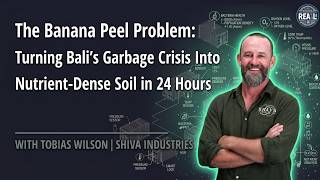
Turning Bali's garbage crisis into nutrient-dense soil

40.62%

of the 25.15 million tonnes of waste recorded in 2025 by Indonesia's national waste information system (SIPSN) was food waste36

Tobias Wilson says beach and river cleanups in Bali led him to aerobic digestion after a long career in Singapore's advertising and digital-tech world. In the episode he explains how Shiva Industries' automated machines turn food and organic waste into a nutrient-rich soil amendment within a day, against months for traditional composting, and says they now run across four Indonesian islands.

Watch the episode →
A New Parcel Every Week. Then She Found Out What It Cost.
Singapore

EP15Priyanka Shahra · Swapaholic

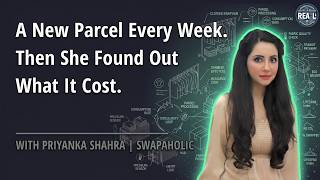
A New Parcel Every Week. Then She Found Out What It Cost.

36%

fall in clothing utilisation, the number of times a garment is worn before it is thrown away, between 2000 and 2015, while global clothing production doubled, the Ellen MacArthur Foundation says37

Every second, the equivalent of a rubbish truck of clothes is burnt or buried in landfill, according to the Ellen MacArthur Foundation38.

Priyanka Shahra says that in her early twenties a new online-fashion parcel arrived at her door every week, until she learned what fashion costs the planet. In the episode she explains how she built Swapaholic, a members' clothes-swapping community closet in Singapore, and later DinoStaury for children.

Watch the episode →

See how these conversations connect on the Discovery Atlas →

06Sources

One research agent gathered 40 figures from government, regulator and established data sources. A separate red-team agent then reopened every source, checked each number, its scope and its date, and looked for newer or conflicting data. It kept 17 figures as written, corrected 21 and cut 2. Each figure above links to its source below, with the date it refers to.

  1. Deloitte, Global Circularity Gap Report page, 19 May 2026 (Circle Economy with Deloitte) · Circularity Gap Report 2025 (latest published rate; page dated 19 May 2026)
  2. Tibrewal et al., Nature Sustainability 6(10), Oct 2023 (abstract via RePEc/IDEAS) · Study published Oct 2023
  3. ANTARA News, 1 Apr 2026, reporting Bali's Forestry and Environment Agency (DKLH) · From 1 Apr 2026 (reported 1 Apr 2026)
  4. National Environment Agency, Annex A Table 1, CY2025 vs CY2024 Waste Statistics (2026) · CY2025 (NEA annex, 2026)
  5. Textile Exchange, Materials Market Report 2026, 22 Sep 2026 · 2025 (Materials Market Report 2026, 22 Sep 2026)
  6. Indonesia Business Post, 7 May 2025 · May 2025
  7. Circulate Capital press release, 1 Apr 2026 (company statement) · First close announced 1 Apr 2026
  8. e27, Jul 2026, interview with Carousell Chief Strategy Officer Shing Tai Leung (company figures) · FY2025 (reported Jul 2026)
  9. Ellen MacArthur Foundation, The Fashion ReModel overview page · First year of a three-year cycle (page published 21 May 2024; findings undated)
  10. Ellen MacArthur Foundation, 'Rethinking business models for a thriving fashion industry', 23 Nov 2021 · Projection to 2030, published 23 Nov 2021
  11. Ellen MacArthur Foundation, 'Artificial intelligence and the circular economy', 1 Jan 2019 · 2019 estimate for 2030
  12. e27, Jul 2026, interview with Carousell Chief Strategy Officer Shing Tai Leung (company claims) · Reported Jul 2026
  13. Deloitte, Global Circularity Gap Report page, 19 May 2026 (Circle Economy with Deloitte) · Global Circularity Gap Report 2026 (page dated 19 May 2026)
  14. News On AIR (All India Radio), 4 Mar 2025, quoting Environment Minister Bhupender Yadav · Projection to 2050, stated 4 Mar 2025
  15. Mongabay India, 2 May 2025 · Notified Apr 2025; targets 2026-27 to 2030-31
  16. Mongabay India, 2 May 2025 · Rules notified Apr 2025; targets 2025-26 to 2028-29
  17. LiveLaw, 12 Apr 2026 (Rahul Kanna R.N.) · Notified 31 Mar 2026 (G.S.R. 237(E)); targets to 2028-29
  18. IANS, 14 May 2026, reporting a Ministry of Textiles statement · Ministry statement, 14 May 2026 (citing 'Mapping of Textile Waste Value Chain in India 2026')
  19. UNDP Indonesia press release, 22 Aug 2022 (with Bappenas) · Projection to 2030, published Aug 2022
  20. ANTARA News (Mataram), 3 Sep 2024, quoting Bappenas deputy Vivi Yulaswati · Stated 3 Sep 2024 (RPJPN 2025-2045)
  21. SSEK Law Firm client update, 30 Apr 2025 · Issued 2 Apr 2025 (summary dated 30 Apr 2025)
  22. ANTARA News (Mataram), 18 Aug 2025, quoting Environment Minister Hanif Faisol Nurofiq · Stated 18 Aug 2025; target 2029
  23. ANTARA News, 1 Apr 2026 · As of 1 Apr 2026
  24. ANTARA News (English), 11 Jun 2026 · Declared 10 Jun 2026 (reported 11 Jun 2026)
  25. The Jakarta Post, 13 Jul 2026, quoting Environment Minister Mohammad Jumhur Hidayat · Stated 13 Jul 2026; regulation not yet issued
  26. Ministry of Sustainability and the Environment, Waste Management policy page (checked 20 Oct 2026) · Targets to 2030 (2019 Zero Waste Masterplan, under review since Jul 2026)
  27. Ministry of Sustainability and the Environment, written parliamentary reply by Minister Grace Fu, 5 Nov 2025 · Written reply, 5 Nov 2025
  28. National Environment Agency, Waste Statistics and Overall Recycling (updated 18 Jun 2026) · Started 1 Apr 2026; full operation from 1 Oct 2026
  29. Ministry of Sustainability and the Environment, written parliamentary reply by Minister Grace Fu, 9 Sep 2026 · Written reply, 9 Sep 2026
  30. Textile Exchange, Materials Market Report 2026, 22 Sep 2026 · 2025 (Materials Market Report 2026, 22 Sep 2026)
  31. Textile Exchange, Materials Market Report 2026, 22 Sep 2026 · 2025 (Materials Market Report 2026, 22 Sep 2026)
  32. National Environment Agency, Waste Statistics and Overall Recycling (updated 18 Jun 2026) · CY2025 (published Jun 2026)
  33. National Environment Agency, Waste Statistics and Overall Recycling (updated 18 Jun 2026) · CY2025 (published Jun 2026)
  34. Toxics Link, reproducing the MoEFCC reply to Rajya Sabha Unstarred Question 1982, 12 Dec 2024 · FY2022-23 (reply of 12 Dec 2024)
  35. Mongabay India, 2 May 2025 · 2018 estimate; 2024 projection (reported May 2025)
  36. ANTARA Foto, 10 Mar 2026, citing SIPSN (Ministry of Environment) · 2025 (SIPSN, reported 10 Mar 2026)
  37. Ellen MacArthur Foundation, 'Rethinking business models for a thriving fashion industry', 23 Nov 2021 · 2000-2015 (page published 23 Nov 2021)
  38. Ellen MacArthur Foundation, 'Keeping fashion and textiles in use' overview page (undated) · Undated EMF estimate (page checked 20 Oct 2026)