Building RealBUILDING REALIndustry brief
Industry brief · Creator Economy

Creator economy, where local creators write city games

One Building Real guest works with creators. In Romania, Claudiu Petria co-founded Questo, a city-games company whose story-led quests are written by local creators. This brief covers the creator economy around him in Romania and the wider EU: what the big platforms say they pay creators, how AI is changing the work, and the disclosure rules now reaching influencers.

Romania
Checked 20 Oct 2026 · every figure linked to its source · next review Jan 2027

01At a glance

97%

of 576 influencers checked in an EU-wide sweep published on 14 February 2024 posted commercial content, but only one in five systematically indicated it was advertising1

Screening by consumer authorities in 22 member states plus Norway and Iceland, including Romania. Not a finding of breach, and no Romania-only result
36%

of the influencers checked in the same sweep were registered as traders at national level, though 78% were exercising a commercial activity2

Screening results, not findings of breach
100,000

followers or subscribers, which can be combined across platforms, is one of the conditions under which Romanian social media channels run as a commercial activity must notify the regulator CNA from 27 September 2026, alongside at least 24 audiovisual pieces in the last 12 months3

A notification duty that applies only when all the conditions are met. Reaching the follower count alone does not trigger it
79.57%

of individuals in Romania participated in social networks in 2025, against 67.26% across the EU, according to Eurostat4

Using social networks, not creating content for income
USD 1,503.1m

Roblox says creators on its platform earned USD 1,503.1 million in 2025, up from USD 922.8 million in 20245

Roblox's own measure, for one platform and one year. Not comparable with other platforms' payout figures

02Where the money is moving

Roblox, by its own account

  • Cash payouts. Roblox says over 23,500 creators took part in its Developer Exchange Program and were paid in cash for their earned Robux in 2025, and over 35,500 creators had qualified for and registered in the program as of 31 December 20256.
  • Who makes the content. Roblox says creators build nearly all of the content on its platform, which averaged 127 million daily active users across more than 180 countries in 20257.
Roblox's own figures from its annual filing. Program counts show how many creators were paid, not what a typical creator earns.

YouTube, by its own account

  • Payouts. YouTube said in September 2025 that it had paid out more than USD 100 billion to creators, artists and media companies globally over the previous four years8.
  • Revenue. Alphabet CEO Sundar Pichai said YouTube's annual revenues surpassed USD 60 billion across ads and subscriptions in 20259. Alphabet reported YouTube ads revenue of USD 11,383 million in the fourth quarter of 2025, against USD 10,473 million a year earlier10.
The payout figure covers creators, artists and media companies over four years. Revenue is not money paid to creators, and the two are not used to work out a creator share.

Spotify, by its own account

  • Payouts. Spotify says it paid the music industry more than USD 11 billion in 2025, bringing its all-time total to nearly USD 70 billion11.
  • Royalties. Spotify says more than 1,500 artists generated over USD 1 million in royalties from Spotify in 2025, and more than 13,800 generated at least USD 100,000 from Spotify alone12.
  • Independent artists. More than a third of artists who generated USD 10,000 or more in royalties from Spotify in 2025 were DIY, Spotify says13.
Spotify's own figures. Payments go to rights holders across the music industry, and royalties generated are shared with labels, publishers and co-writers, so they are not artists' take-home pay.

Epic Games, by its own account

  • Payouts. Epic Games said in June 2026 that it had paid more than USD 1 billion to creators since launching Unreal Editor for Fortnite in 2023, Outlook Respawn reported14.
  • Player time. Epic's director of Fortnite developer relations, Hannah Lowry, said in June 2026 that games made by creators captured 47% of all Fortnite player hours in May 2026, up from 38% a year earlier, Outlook Respawn reported15.
  • Revenue terms. Video Games Chronicle reported in September 2025 that Epic puts 40% of the net revenue from Fortnite's own Item Shop and related real-money purchases into an 'engagement pool' for creators, and that until the end of 2026 creators would earn 100% of the V-Bucks value of sales made in their islands, falling to 50% in 202716.
Epic is private and files no accounts; these are its statements and terms as reported by the press. The payout figure is cumulative since the editor launched, the player-hours figure covers one month, and the terms may have changed since they were reported.

Venture funding

USD 100m

raised by newsletter platform Substack in a Series C round led by BOND and The Chernin Group in July 2025, which The New York Times reported valued it at USD 1.1 billion, TechCrunch said17

One deal, not a funding total. Each company's payout figure above is its own statement and measure, over different periods and recipients, so none of them is added up, ranked or compared.

03How AI is changing the work

What platforms said they would label

  • YouTube. YouTube said in March 2024 that it would require creators to disclose when realistic content is made with altered or synthetic media, including generative AI, with a label in the expanded description for most videos and a more prominent label on the video itself for sensitive topics such as health, news, elections or finance18.
  • Meta. Meta said in February 2024 that it would label images users post to Facebook, Instagram and Threads when it can detect industry-standard indicators that they are AI-generated, and would require people to disclose photorealistic video or realistic-sounding audio that was digitally created or altered, with possible penalties if they fail to do so19.
  • Likeness and AI video. YouTube said in September 2025 that its likeness detection tool, which lets creators detect and manage AI-made videos using their facial likeness, was coming soon to all YouTube Partner Program creators in open beta, and that it had started integrating Google DeepMind's Veo 3 Fast into YouTube Shorts20.
Company announcements. The platforms' current policies were not checked for this brief.

What creators told Adobe

  • Growth. In Adobe's Creators' Toolkit Report 2026, a survey of more than 16,000 creators in the US, UK, France, Germany, South Korea, Japan, India and Australia in May 2026, 87% of creators using creative AI said it had accelerated the growth of their business or audience21.
  • Disclosure and copyright. In the same May 2026 survey, 49% of creators said they always or often disclose AI use while 18% rarely or never do, and 90% said it is important to be able to obtain copyright protection for work created with the assistance of creative AI22.
A survey run by Adobe, which sells creative AI tools. The growth figure is among creators using creative AI, not all creators. Romania is not covered, and the disclosure rates are not comparable with the EU sweep's.

04Romania: audiences and the influencer market

How people in Romania use the internet

  • Social networks. According to Eurostat, 79.57% of individuals in Romania participated in social networks in 2025, against 67.26% across the EU4.
  • Video. According to Eurostat, 26.77% of individuals in Romania watched video content from sharing services in 2024, against 61.51% across the EU23.
  • Sharing their own work. In 2020, the latest year available, 15.41% of individuals in Romania shared or published self-created videos, photos, music or texts online, against 34.11% across the EU, according to Eurostat24.
  • Digital skills. According to Eurostat, 31.84% of individuals in Romania had basic or above basic overall digital skills in 2025, against 60.4% across the EU25.
Separate Eurostat questions from different years, each shown on its own. Using social networks or watching video is not creating content for income.

What the influencer market looks like

  • Brand spend. A study by MOCAPP and HypeAuditor estimates Romania's influencer marketing market at EUR 121 million in 2026, up 8% from EUR 112 million in 2025, Mobilissimo reported26.
  • Accounts. The same study counted 62,960 active Instagram accounts and about 261,800 active TikTok accounts in its Romanian influencer base, not deduplicated across platforms, and found nearly 95% of the Instagram creators analysed had under 50,000 followers, Mobilissimo reported27.
An industry estimate by an agency and an analytics vendor of what brands spend on influencer marketing, not what creators earn. The counts are accounts in the study's base, not people.

05What EU and Romanian rules are changing

Disclosure, labelling and influencers

  1. Influencer sweep. Consumer authorities in 22 member states plus Norway and Iceland, including Romania, published an EU-wide sweep of posts by 576 influencers: 97% posted commercial content, but only one in five systematically indicated it was advertising1. 38% did not use the platform labels for disclosing commercial content, and the Commission launched its Influencer Legal Hub in 202328. 358 influencers were earmarked for further investigation2.
  2. Council conclusions. The Council of the EU (Education, Youth, Culture and Sport) approved non-binding conclusions on support for influencers as online content creators, inviting member states to facilitate policy dialogue with influencers and support training programmes, and the Commission to keep the Influencer Legal Hub up to date and reflect on the impact of influencers on minors and the position of kidfluencers29.
  3. Romania's CNA. The audiovisual regulator adopted Decision No. 116 of 24 February 2026, in force from 27 September 2026, under which social media channels run as a commercial activity that brings the creator money, products, services or other benefits, with at least 100,000 followers or subscribers (which can be combined across platforms) and at least 24 audiovisual pieces in the last 12 months, must notify CNA, within 60 days of entry into force for those already meeting the conditions, Wall-Street.ro reported3.
  4. AI Act, Article 50. From 2 August 2026, the article requires providers to ensure AI-generated or AI-manipulated audio, image, video and text outputs are marked and deployers to clearly label deepfakes, and the Commission published the final, voluntary Code of Practice on marking and labelling AI-generated content on 10 June 202630.
  5. Digital Omnibus transition. AI systems placed on the market before 2 August 2026 have a transition period until 2 December 2026 for the AI Act's Article 50(2) marking and detection obligations, while systems placed on the market from 2 August 2026 must comply immediately, Bristows reported31.
  6. Digital Fairness Act. The act has not yet been proposed; the Commission's 2026 work programme lists it as a legislative initiative for the fourth quarter of 2026, and the European Parliament's tracker names marketing by social media influencers among the practices it is expected to address32.
The sweep is screening, and being earmarked for investigation is not a finding of breach. The Council conclusions are non-binding. The Code of Practice is voluntary, while Article 50 is law. The CNA decision is described from a press report, not the decision text. The Digital Fairness Act is planned, not proposed, as of 20 October 2026, and its content is not public.

What creators told a YouTube-commissioned consultation

63%

of respondents said creators receive too little or no support with government representation, in a consultation commissioned by YouTube and run by Public First, with 20,617 completed responses from creators in all 27 EU member states between 1 June and 8 July 2026, Net Influencer reported33

Commissioned by YouTube, which has an interest in the policy debate. Self-selected responses, with no split for Romania.

06Trends to watch

07The problem our guest is solving

Claudiu Petria on Building Real
Romania

EP14Claudiu Petria · Questo

  • How the games are made. Questo's city games are created by locals or with business partners such as tour operators, attractions and airlines on a revenue-share basis, and its co-founder and CEO Alex Govoreanu described it in 2021 as 'Steam for real-world games'34.
  • The storytellers. In August 2024 Romania Insider reported that Questo's experiences were crafted by a community of over 30,000 amateur and professional storytellers and had generated over 500,000 participating users worldwide35.
  • Early funding. In February 2021, Romanian startup Questo, which creates city exploration games, raised USD 1.5 million in a round led by Early Game Ventures with support from Sparking Capital, and had grown from 40 cities in Europe at the start of 2020 to over 100 cities on four continents36.
Company figures reported by Tech.eu in 2021 and Romania Insider in 2024, not current figures. The 'Steam for real-world games' line is the CEO's, not the guest's.

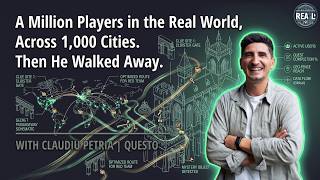
Claudiu Petria, Questo's co-founder and former COO, was born at home in a tiny Romanian village. In the episode he explains how Questo turns a city into a game: players find statues, plaques and details on the street, solve clues and unlock stories, with no AR or VR on purpose. He says local creators write the games on Questo's own platform and that the games are sold direct and through travel resellers, and he talks about why, after years in survival mode, he chose to walk away.

Watch the episode →

See how these conversations connect on the Discovery Atlas →

08Sources

One research agent gathered 39 figures from government, regulator and established data sources. A separate red-team agent then reopened every source, checked each number, its scope and its date, and looked for newer or conflicting data. It kept 12 figures as written, corrected 27 and cut 0. Each figure above links to its source below, with the date it refers to.

  1. European Commission press release IP/24/708 (14 Feb 2024) · Sweep results published 14 Feb 2024
  2. European Commission press release IP/24/708 (14 Feb 2024) · Sweep results published 14 Feb 2024
  3. Wall-Street.ro, 7 Sep 2026 · Decision of 24 Feb 2026, in force 27 Sep 2026
  4. Eurostat, isoc_ci_ac_i, I_IUSNET (updated 17 Apr 2026) · 2025 (dataset updated 17 Apr 2026)
  5. Roblox Corporation, Form 10-K for FY2025 (SEC, Feb 2026) · FY2025 (year to 31 Dec 2025)
  6. Roblox Corporation, Form 10-K for FY2025 (SEC, Feb 2026) · FY2025; registrations at 31 Dec 2025
  7. Roblox Corporation, Form 10-K for FY2025 (SEC, Feb 2026) · FY2025
  8. YouTube Official Blog, Made on YouTube 2025 (16 Sep 2025) · Four years to Sept 2025 (statement of 16 Sep 2025)
  9. Alphabet Inc., Q4 and fiscal year 2025 results, Exhibit 99.1 to Form 8-K (SEC, 4 Feb 2026) · FY2025 (results released 4 Feb 2026)
  10. Alphabet Inc., Q4 2025 results, Exhibit 99.1 to Form 8-K (SEC, 4 Feb 2026) · Q4 2025 vs Q4 2024
  11. Spotify Newsroom, Loud & Clear 2026 (11 Mar 2026) · 2025 (published 11 Mar 2026)
  12. Spotify Newsroom, Loud & Clear 2026 (11 Mar 2026) · 2025
  13. Spotify Newsroom, Loud & Clear 2026 (11 Mar 2026) · 2025
  14. Outlook Respawn (Outlook India), 20 Jun 2026 · Cumulative 2023 to June 2026 (announced 17 Jun 2026)
  15. Outlook Respawn (Outlook India), 20 Jun 2026 · May 2026 vs May 2025
  16. Video Games Chronicle, 19 Sep 2025 · Terms as reported 19 Sep 2025
  17. TechCrunch, 17 Jul 2025 · July 2025
  18. YouTube Official Blog (18 Mar 2024) · Announced 18 Mar 2024
  19. Meta Newsroom (6 Feb 2024) · Announced 6 Feb 2024
  20. YouTube Official Blog, Made on YouTube 2025 (16 Sep 2025) · Announced 16 Sep 2025
  21. Adobe Newsroom, Creators' Toolkit Report 2026 (16 Jun 2026) · Fieldwork May 2026 (released 16 Jun 2026)
  22. Adobe Newsroom, Creators' Toolkit Report 2026 (16 Jun 2026) · Fieldwork May 2026 (released 16 Jun 2026)
  23. Eurostat, isoc_ci_ac_i, I_IUVSS (updated 17 Apr 2026) · 2024 (biennial; dataset updated 17 Apr 2026)
  24. Eurostat, isoc_ci_ac_i, I_IUUPL1 (updated 17 Apr 2026) · 2020 (latest available)
  25. Eurostat, isoc_sk_dskl_i21, I_DSK2_BAB (updated 17 Apr 2026) · 2025 (dataset updated 17 Apr 2026)
  26. Mobilissimo.ro, 27 Sep 2026, reporting MOCAPP and HypeAuditor · 2026 estimate (reported 27 Sep 2026)
  27. Mobilissimo.ro, 27 Sep 2026, reporting MOCAPP and HypeAuditor · 2026 study (reported 27 Sep 2026)
  28. European Commission press release IP/24/708 (14 Feb 2024) · Sweep results published 14 Feb 2024
  29. Council of the EU, document 9301/24 (14 May 2024) · Approved 13-14 May 2024 (document dated 14 May 2024)
  30. Jones Day, June 2026 alert · Applies from 2 Aug 2026 (Code published 10 Jun 2026)
  31. Bristows, Inquisitive Minds blog, 30 Jul 2026 · Transition to 2 Dec 2026 (post of 30 Jul 2026)
  32. European Parliament, Legislative Train: Digital Fairness Act (accessed 20 Oct 2026) · Status at 20 Oct 2026
  33. Net Influencer, 13 Oct 2026, reporting Public First for YouTube · Fieldwork 1 Jun-8 Jul 2026 (reported 13 Oct 2026)
  34. Tech.eu, 18 Feb 2021 · Feb 2021
  35. Romania Insider, 7 Aug 2024 (updated 12 Aug 2026) · Aug 2024
  36. Tech.eu, 18 Feb 2021 · Feb 2021